Choosing the right plastic material is one of the most important decisions in an injection molding project. Material selection affects not only the strength, appearance and performance of the finished part, but also mold design, shrinkage, dimensional stability, cycle time, tooling requirements and overall production cost.
At UTTMould, material selection is reviewed together with part geometry, tolerance requirements, surface finish, expected production volume and application conditions before injection mold manufacturing begins.
There is no single best plastic for injection molding. ABS is widely used when a balance of strength, appearance and cost is required. Polypropylene (PP) is suitable for lightweight parts requiring chemical resistance and flexibility. Polycarbonate (PC) provides high impact resistance and can be used for transparent components. Nylon (PA) is commonly selected for mechanical strength and wear resistance, while POM (Acetal) is useful for low-friction mechanical components and good dimensional performance.
For demanding applications, engineering plastics such as PBT, PPS and PEEK may provide higher temperature, chemical or mechanical performance. The correct choice should be based on the part's function, operating environment, dimensional requirements, production volume and target cost.
| Material | Key Properties | Common Applications | Main Considerations |
|---|---|---|---|
| ABS | Good strength, appearance and processability | Housings, covers, consumer products | Moderate heat and chemical resistance |
| PC | High impact strength, heat resistance, transparency | Covers, lenses, protective components | Higher processing temperature |
| PC/ABS | Balance of toughness, heat resistance and processability | Electronics and automotive housings | Grade selection affects performance |
| PP | Lightweight, chemical resistant, flexible | Containers, clips, living hinges | Higher shrinkage and dimensional movement |
| PA / Nylon | Strong, wear resistant, good mechanical properties | Gears, brackets, mechanical parts | Moisture absorption affects dimensions |
| PA66-GF30 | High stiffness and mechanical strength | Automotive and structural components | Fiber orientation and warpage require attention |
| POM / Acetal | Low friction, good wear resistance and dimensional performance | Gears, bearings, clips, precision mechanisms | Processing and shrinkage must be controlled |
| PMMA | High transparency and good surface appearance | Lenses, light covers, display components | More brittle than PC |
| TPE / TPU | Flexible and elastic | Seals, grips, flexible components | Hardness and bonding requirements vary |
| PBT | Good electrical and dimensional properties | Electrical connectors and housings | Moisture control before molding |
| PPS | High temperature and chemical resistance | Industrial and automotive components | Higher material and processing cost |
| PEEK | Exceptional thermal and chemical performance | Aerospace, medical and demanding industrial parts | Very high material and processing cost |
Material properties vary by resin manufacturer, grade, reinforcement, additives and molding conditions. Final material selection should be confirmed using the specific resin datasheet and project requirements.
Material selection should start with the functional requirements of the molded part rather than simply choosing the lowest-cost resin. Engineering teams should consider several factors before tooling begins.
Does the part need stiffness, impact resistance, fatigue resistance, wear resistance or flexibility? A structural bracket may require a reinforced engineering plastic, while a cosmetic enclosure may prioritize surface quality and impact resistance.
Parts exposed to engines, electrical systems, industrial equipment or high-temperature environments may require materials with higher heat resistance than standard commodity plastics.
Consider whether the molded part will contact oils, fuels, cleaning chemicals, solvents, moisture or other substances during use.
Tight-tolerance parts require careful evaluation of shrinkage, moisture absorption, fiber orientation and thermal expansion. Material selection and mold design must therefore be considered together.
Color, gloss, transparency, texture and cosmetic requirements can significantly affect material selection.
A material that performs well technically may not always be commercially appropriate for high-volume production. Material cost, cycle time, mold requirements and expected annual volume should be evaluated together.
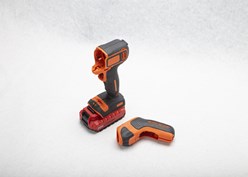
ABS (Acrylonitrile Butadiene Styrene) is one of the most widely used thermoplastics for injection molded products. It provides a useful balance between mechanical strength, impact resistance, surface appearance, processability and cost.
ABS offers good dimensional stability, relatively easy processing and good cosmetic surface quality. It can also support painting, printing and other secondary operations depending on the selected grade.
Although ABS is relatively easy to mold, wall thickness transitions, ribs, bosses, gate location and cooling still need to be reviewed during DFM. Poor design can lead to sink marks, weld lines, warpage or cosmetic defects.
Polycarbonate is an engineering thermoplastic known for high impact strength, toughness and heat resistance. Certain grades also provide excellent optical transparency.
Polycarbonate generally requires higher processing temperatures than materials such as ABS or PP. Moisture control, mold temperature, gate design and processing conditions are important for achieving stable molded parts. For transparent or highly cosmetic PC parts, mold polishing, gate position, flow behavior and surface requirements should be defined before tooling.
PC/ABS blends combine characteristics of polycarbonate and ABS. They are widely used when a project requires better toughness and heat resistance than standard ABS while maintaining useful processability and surface quality.
Typical applications include electronic housings, automotive interior components, equipment covers, control panels and functional enclosures. Different PC/ABS grades can provide significantly different performance, so resin grade selection should be based on the actual application rather than specifying only 鈥淧C/ABS.鈥�
Polypropylene is a lightweight thermoplastic widely used in high-volume injection molding. It provides good chemical resistance, relatively low density and useful fatigue performance.
PP generally has higher molding shrinkage than materials such as ABS. For parts with dimensional or flatness requirements, mold shrinkage, cooling balance and part geometry need careful consideration. Its fatigue resistance also makes PP particularly useful for properly designed living hinges.
Nylon, also known as polyamide or PA, is widely used for functional mechanical components because of its strength, toughness and wear resistance. Common injection molding grades include PA6 and PA66.
PA6 generally provides good toughness and processability, while PA66 is often selected when greater stiffness or temperature performance is required. However, the exact properties depend heavily on the specific resin grade and reinforcement.
Moisture can influence both mechanical properties and dimensions after molding. Therefore, tight-tolerance nylon parts should be evaluated under realistic operating and conditioning requirements.
Glass fiber is frequently added to nylon to increase stiffness, strength and dimensional performance. PA66-GF30, containing approximately 30% glass fiber by weight depending on the specified grade, is widely used for structural and automotive applications.
Typical applications include structural brackets, automotive components, mechanical housings, load-bearing components and industrial equipment parts.
Fiber orientation can create different shrinkage behavior in different directions, increasing the risk of warpage. The abrasive nature of glass fiber may also influence mold steel and tooling decisions for long production runs. For PA66-GF30 parts, UTTMould recommends reviewing gate location, flow direction, wall thickness, tolerance and warpage risk during DFM before mold manufacturing begins.
POM, also known as acetal, is an engineering thermoplastic valued for low friction, wear resistance, stiffness and good dimensional performance. It is commonly used for gears, bushings, bearings, clips, mechanical mechanisms and precision functional components.
POM is particularly useful when molded components interact with other moving parts. However, mold design, shrinkage allowance, venting and processing conditions should be properly controlled.
PMMA is widely selected when optical clarity and surface appearance are important. Typical applications include transparent covers, lenses, light guides, display components and decorative components.
PMMA can provide excellent transparency but is generally more brittle than polycarbonate. When choosing between PC and PMMA, the engineering team should evaluate transparency, impact requirements, surface appearance, temperature conditions and cost.
Thermoplastic elastomers such as TPE and TPU are used when molded parts require flexibility, elasticity, grip or soft-touch characteristics. Typical applications include seals, flexible covers, grips, protective components, soft-touch features and overmolded components.
Material hardness, chemical resistance, wear requirements and bonding compatibility should be reviewed before selecting a specific TPE or TPU grade. For overmolding projects, compatibility between the soft material and rigid substrate is especially important.
PBT provides useful electrical properties, dimensional stability and chemical resistance. It is commonly found in electrical connectors, automotive electrical components and industrial housings.
PPS provides high temperature resistance, chemical resistance and dimensional stability. It is often used in demanding automotive, electrical and industrial applications.
PEEK is a high-performance engineering thermoplastic offering exceptional temperature, chemical and mechanical performance. Applications may include aerospace, medical, semiconductor and demanding industrial components. PEEK is significantly more expensive than standard engineering plastics and requires specialized processing conditions, so it should normally be selected only when the application requires its performance.
Plastic material selection should be confirmed before final mold design whenever possible. Changing resin after mold manufacturing begins can affect dimensions, part quality and tooling performance.
Different plastics shrink at different rates during cooling. The mold cavity must account for expected shrinkage to achieve the required finished dimensions. For reinforced plastics, shrinkage can also vary according to flow and fiber orientation.
Warpage is influenced by part geometry, material shrinkage, gate position, cooling and molding conditions. Materials with high shrinkage or fiber reinforcement require particular attention during DFM and mold design.
Material viscosity, flow length, wall thickness and cosmetic requirements influence gate type, size and location. Poor gate planning can contribute to short shots, weld lines, excessive pressure, warpage and visible gate marks.
Cooling behavior affects cycle time and dimensional stability. Mold cooling should be designed together with part geometry and material behavior rather than treated as a separate consideration.
Material, surface texture, part depth and geometry influence the draft required for reliable ejection. Insufficient draft may result in drag marks, scratches, sticking or deformation during demolding.
Standard thermoplastics and abrasive reinforced materials do not create identical tooling conditions. For high-volume production with glass-filled or otherwise demanding materials, mold steel, hardness and wear resistance should be considered during tooling planning.
A tolerance that is practical for one material and geometry may be difficult to maintain with another. Material shrinkage, moisture absorption, fiber reinforcement, part size and process stability should all be considered. See our injection mold tolerance guide.
Automotive applications may prioritize heat resistance, impact strength, dimensional stability, chemical resistance and long-term durability. Common options include PP, PC/ABS, PA and glass-filled engineering plastics, depending on the component.
Electronic housings and components may require appearance, impact resistance, electrical properties, heat performance and flame-retardant grades. ABS, PC/ABS, PC and PBT are frequently evaluated.
Medical applications may require biocompatibility, sterilization resistance, traceability and regulatory documentation. The specific approved resin grade must be selected according to the intended device and market requirements.
These parts often balance cost, appearance, impact performance, color and production volume. ABS, PP, PC and PC/ABS are common candidates.
Industrial parts may need wear resistance, chemical resistance, stiffness or long-term dimensional performance. Nylon, POM, PBT, PPS and reinforced materials may be appropriate.
The resin family, exact grade, reinforcement, color and additives should be confirmed as early as possible. UTTMould reviews material requirements together with CAD geometry, critical dimensions, annual volume, mold life, gate strategy and inspection requirements before tooling.
This integrated review helps reduce mold modifications, unexpected warpage, cosmetic defects and dimensional problems after the first mold trial. Learn more about our plastic injection molding capabilities and quality control process.
ABS and polypropylene are among the most widely used materials, but no resin is best for every part. The correct material depends on strength, temperature, chemical exposure, appearance, tolerance, volume and cost.
Polycarbonate is often selected for high impact resistance. PC/ABS may be considered when a balance of impact performance, heat resistance, processability and appearance is needed.
POM and nylon are commonly evaluated for gears because of their wear resistance and mechanical properties. The best choice depends on load, speed, lubrication, moisture, temperature and dimensional requirements.
PC and PMMA are common transparent materials. PC generally offers higher impact resistance, while PMMA can provide excellent optical clarity and surface appearance.
Yes. Material can influence mold steel selection, gate and runner design, cooling, shrinkage allowance, wear resistance and processing requirements. Abrasive reinforced plastics or high-temperature engineering plastics may require different tooling considerations than standard materials.
Sometimes, but the change should be reviewed carefully. Different plastics have different shrinkage, flow and processing characteristics. Changing resin can affect dimensions, warpage, appearance and production stability.
Yes. UTTMould can review the application, CAD data, operating environment, tolerance, production quantity and cost target, then discuss suitable resin families and grades before mold manufacturing.
If you are unsure which plastic is suitable for your injection molded part, send us your 3D CAD files, application requirements, expected quantity, critical dimensions and preferred material information.
Our engineering team can review material selection together with manufacturability, mold design, tooling strategy and quality requirements.
Follow Us: 


Copyright © 2026 UTTMould All Rights Reserved Sitemap XML Quality Inspection Checklist Injection Mold Guide