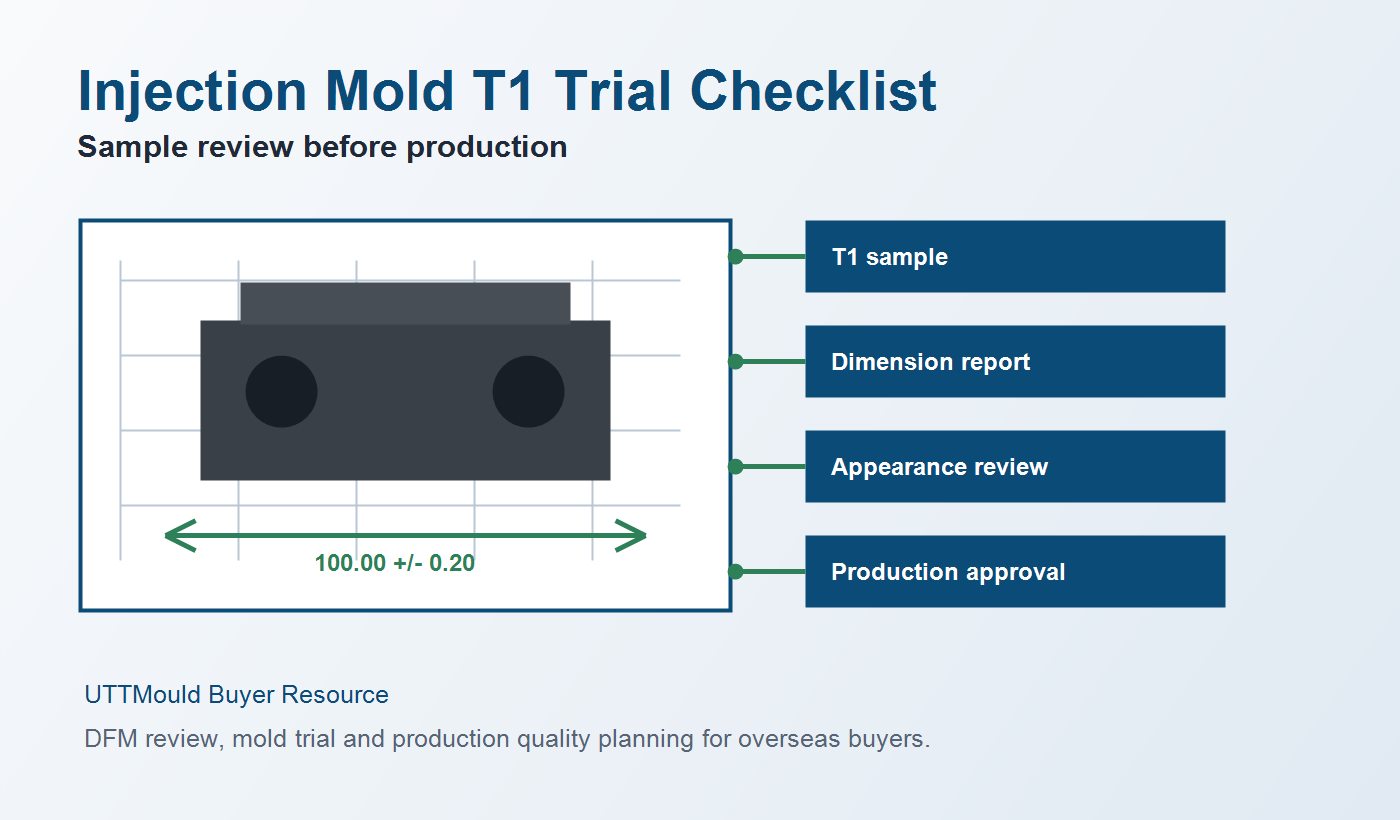
A T1 injection mold trial is one of the most important checkpoints before production. For overseas buyers, the first samples show whether the mold, part design, resin and molding process are ready for adjustment, validation or production planning. A clear T1 review checklist helps prevent late tooling changes, quality disputes and avoidable delays.
A T1 mold trial checklist should review mold filling, appearance defects, key dimensions, warpage, shrinkage, gate vestige, ejection marks, assembly fit, resin behavior and required tooling actions. Buyers should not treat T1 samples as final production approval unless the mold, process and quality requirements have been confirmed.
The first mold trial should answer practical engineering questions: does the mold fill correctly, are there obvious tooling risks, do the samples meet critical dimensions, and what changes are needed before the next sample stage? Buyers should confirm the resin, machine tonnage, molding condition, sample quantity and inspection plan before reviewing T1 samples.
| T1 input | Why it matters |
|---|---|
| Resin and color | Material behavior affects shrinkage, strength, appearance and dimensional stability. |
| Molding condition | Temperature, pressure, speed and cooling affect filling, warpage and cycle stability. |
| Drawing and tolerance notes | Inspection should focus on critical-to-quality dimensions and functional areas. |
| Assembly requirements | Mating parts, clips, bosses and sealing surfaces often reveal risks not visible in CAD alone. |
Visual inspection should look beyond whether the part is complete. T1 samples should be checked for short shots, flash, burns, weld lines, flow marks, sink marks, black spots, scratches, gate vestige, ejection marks and parting line condition. For broader production inspection planning, see the plastic injection molding quality inspection checklist.
T1 dimensional inspection should prioritize critical-to-quality features instead of measuring every noncritical surface first. Check datum references, hole positions, wall thickness, snap fits, bosses, threaded areas, sealing features and assembly interfaces. A clear measurement report makes mold correction faster and avoids vague feedback.
Some injection molding issues only appear when parts are assembled. Buyers should test mating parts, clips, screw bosses, moving features, sealing areas, covers, inserts and cosmetic surfaces. If assembly parts are available, they should be sent before or during T1 review so the supplier can confirm function as well as dimensions.
After T1 review, the next action should be clear: approve for the next stage, adjust molding conditions, polish or texture the mold, modify steel, revise the part design, run another sample trial or prepare for production validation. This decision should be recorded with photos, measurement data and owner responsibilities.
| T1 result | Recommended next action |
|---|---|
| Minor process issue | Adjust molding condition and resample if needed. |
| Dimensional deviation | Review shrinkage, steel condition and possible mold modification. |
| Appearance issue | Check gate, venting, polishing, material dryness and processing window. |
| Assembly failure | Compare sample, CAD, drawing and mating part conditions before modification. |
| Stable samples | Move toward production validation, quality control planning and shipment approval. |
A good T1 review is easier when quality requirements are shared during RFQ. Buyers should send CAD files, drawings, resin, annual volume, cosmetic requirements, tolerance notes and assembly information before tooling begins. For project review, use the UTTMould RFQ contact page. For broader mold sourcing planning, read the Injection Mold Manufacturing in China Guide.
Buyers should check dimensions, appearance, material behavior, filling balance, warpage, sink marks, gate vestige, ejection marks, assembly fit and any critical-to-quality requirements before approving tooling changes or production.
No. A T1 sample is the first mold trial output. It is used to identify mold, process and part issues before final approval, production validation or shipment release.
Useful T1 feedback should include drawing markups, measurement reports, photos of defects, assembly comments, cosmetic standards, functional notes and a clear list of required mold or process actions.
Yes. UTTMould can support T1 mold trial review, sample inspection, engineering feedback, mold adjustment and production readiness review before injection molding production.
Published by UTTMould. This guide is for project planning; part-specific feasibility, inspection scope and acceptance criteria must be agreed during DFM and quotation.
Follow Us: 


Copyright © 2026 UTTMould All Rights Reserved Sitemap XML Quality Inspection Checklist Injection Mold Guide