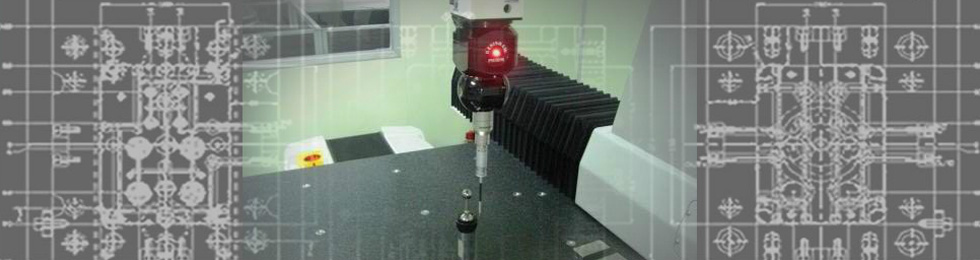
Ordinary components simply do not survive when equipment operates under harsh temperatures and crushing pressures. Molded parts that maintain their strength, shape, and dimensional precision under actual stress are required by heavy-duty industries. Industrial molding solutions are useful in this situation.
Molded parts have a structural rather than aesthetic purpose in anything from heavy transport equipment to agricultural systems and mining machinery. Material integrity, strength, and tolerance control become non-negotiable.
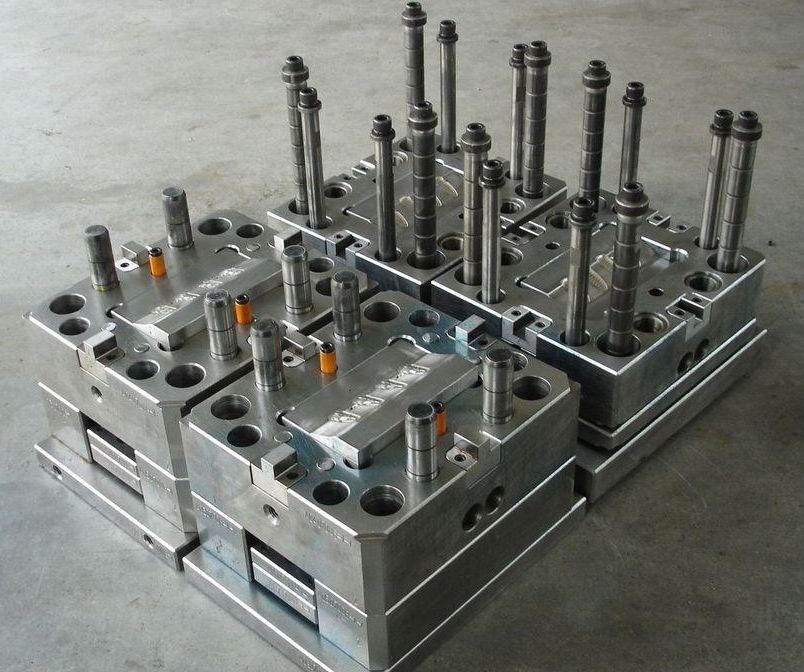
Hard-duty industries work in challenging environments. Components are subject to heat fluctuation, mechanical pressure, vibration, and corrosion. Financial loss, equipment failure, and downtime can result from poorly molded parts.
Advanced Moulding China have taken the lead in meeting this need by combining rigorous quality control, engineered materials, and precision tooling. The emphasis is on repeatable durability rather than just bulk production.
Industrial moulding for heavy-duty use typically involves:
闂備礁纾妴瀣箯閿燂拷 High-performance thermoplastics and reinforced polymers
闂備礁纾妴瀣箯閿燂拷 Structural rib designs for load distribution
闂備礁纾妴瀣箯閿燂拷 Tight dimensional tolerances
闂備礁纾妴瀣箯閿燂拷 Controlled cooling cycles to prevent warping
闂備礁纾妴瀣箯閿燂拷 Rigorous inspection protocols
Every phase has a direct impact on field performance, from material selection to final inspection.
Industrial moulding is based on material science. Glass-filled nylon, ABS versions, polypropylene mixes, or specialty technical plastics are commonly required for heavy machinery. These materials remain stable and impact-resistant under stress.
Advanced simulation software is a common investment made by manufacturers who use Moulding China production to serve clients across the world. Engineers test flow behavior, pressure distribution, and possible shrinkage spots before a tool is even cut. As a result, part reliability is increased, and trial cycles are decreased.
Another important factor is precision tooling. Consistent replication is ensured by optimized cavity designs and hardened steel molds even in high-volume manufacturing runs.
| Feature | Standard Injection Moulding | Heavy-Duty Industrial Moulding |
|---|---|---|
| Typical Materials | PP, PE, PS | PA+GF, PEEK, PC/ABS, PPS |
| Mold Life | 100k - 300k cycles | 500k - 1M+ cycles (Hardened Steel) |
| Wall Thickness | Thin, uniform | Thick, reinforced for impact |
Industrial moulding for heavy-duty use goes beyond forming plastic into shape. It involves strict process governance.
Key factors include:
闂備礁纾妴瀣箯閿燂拷 Injection pressure monitoring
闂備礁纾妴瀣箯閿燂拷 Temperature control across cavities
闂備礁纾妴瀣箯閿燂拷 Balanced gate systems
闂備礁纾妴瀣箯閿燂拷 Post mould stress analysis
Structural performance may be jeopardized by slight variations in pressure or temperature. For this reason, skilled producers combine human knowledge with automation.
A CNC prototype stage is often the first step in a project. Engineers can use this to assess mechanical behavior before committing to full-scale mold tooling. This stage of functional validation avoids later, expensive changes.
Industrial moulding solutions serve multiple sectors:
闂備礁纾妴瀣箯閿燂拷 Construction equipment housings
闂備礁纾妴瀣箯閿燂拷 Heavy-duty enclosures
闂備礁纾妴瀣箯閿燂拷 Pump components
闂備礁纾妴瀣箯閿燂拷 Agricultural machine parts
闂備礁纾妴瀣箯閿燂拷 Electrical insulation systems
In each case, moulded parts must resist impact, friction, and environmental exposure while maintaining dimensional stability.
There is no room for poor design or erratic production in heavy-duty applications. Forming material is only one aspect of industrial molding. The goal is to incorporate dependability into each and every part.
Long-term performance is determined by selecting the best manufacturing partner, confirming designs through the development of CNC prototypes, and making sure that strict production standards are followed. Precision in the mold is the first step toward strength in the field.
What
makes industrial moulding suitable for heavy-duty environments?
Industrial moulding uses reinforced materials,
engineered tool design, and controlled processing parameters. These factors
ensure components can tolerate high loads, mechanical stress, temperature
variation, and environmental exposure without structural degradation.
Why
is Moulding China a popular choice for global manufacturers?
Moulding China facilities often combine competitive
production costs with advanced tooling technology, skilled engineering teams,
and strong quality systems, enabling consistent delivery of complex heavy-duty
components across international markets.
How
does a CNC Prototype improve moulding outcomes?
A CNC Prototype allows functional testing before
investing in mould tooling. Engineers can assess structural strength, fitment,
and mechanical behavior, reducing risk and preventing expensive design
revisions during mass production.
Which
materials are commonly used in heavy-duty moulding?
Glass-filled nylon, polypropylene blends, ABS, and
other engineering plastics are frequently selected. These materials provide
impact resistance, dimensional stability, and long-term durability in demanding
industrial applications.
What
are the common challenges in heavy-duty moulding production?
Maintaining consistent temperature, preventing
warping, controlling shrinkage, and ensuring structural reinforcement are
common challenges. Proper simulation, tooling design, and quality control
systems help overcome these production complexities.
Buyers should confirm material, annual quantity, tolerance, surface finish, part function, target tool life and inspection requirements.
UTTMould supports injection mold manufacturing, DFM review, mold trial, modification and molded plastic part production.
Injection molding is suitable when the design needs repeatable plastic parts, stable dimensions and scalable production after tooling validation.
Follow Us: 


Copyright © 2026 UTTMould All Rights Reserved Sitemap XML Quality Inspection Checklist Injection Mold Guide