Quick answer: Before DFM and RFQ, overseas buyers should confirm resin family, exact grade, shrinkage, color, surface finish, operating environment, compliance needs, critical dimensions and inspection requirements. Clear resin information helps UTTMould review mold design risk, quote more accurately and reduce T1 sample changes.
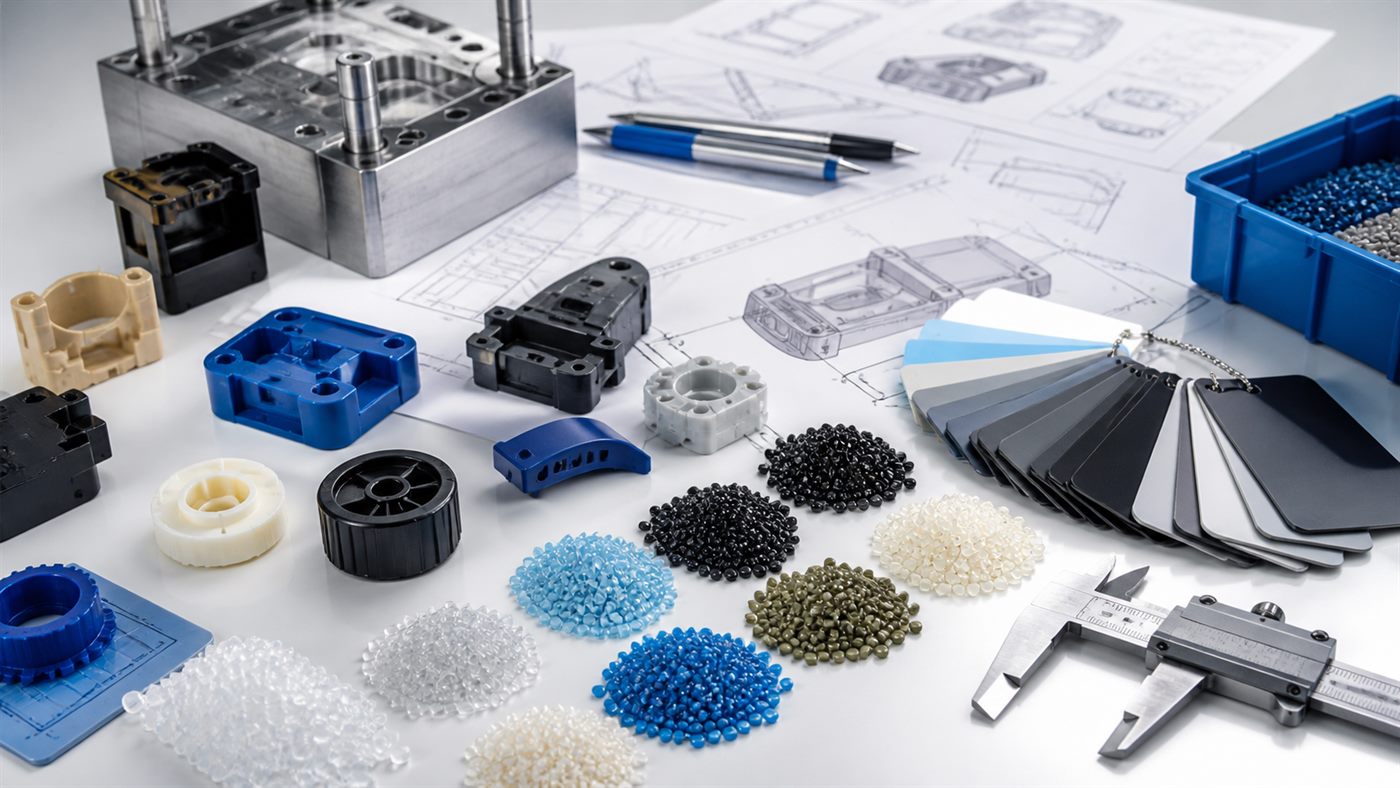
Plastic resin selection is one of the first decisions that affects injection mold cost, mold structure, part tolerance, surface appearance and production quality. If the material is unclear during quotation, the mold supplier can only estimate shrinkage, gate strategy, cooling needs and inspection risk. That often leads to quotation changes, longer DFM discussion and more uncertainty during T1 sample review.
For overseas buyers, resin selection does not need to be perfect before the first inquiry, but the project should include enough information for a practical engineering review. The goal is to let the mold maker understand how the plastic part will be used, what performance is required and which risks must be controlled before tooling starts.
Every plastic material behaves differently in an injection mold. ABS, PC, PP, PA, POM, PMMA, TPE and glass-filled engineering plastics have different shrinkage rates, flow behavior, temperature needs, surface results and dimensional stability. A small change in resin grade can affect part dimensions, warpage, gate location, cooling design and steel selection.
When resin information is confirmed early, the DFM review can check wall thickness, ribs, bosses, clips, screw posts, living hinges, snap fits and cosmetic areas with the real material behavior in mind. This helps reduce mold modification after the first trial.
The first step is to confirm the material family and, when possible, the exact commercial grade. A drawing that only says "plastic" or "ABS or similar" is usually not enough for accurate RFQ review. If the final grade is not decided, buyers should at least describe the target properties and expected application.
If the project is still in development, UTTMould can review the application and discuss common engineering plastics before mold design begins.
Material shrinkage is directly connected to mold dimensions and sample approval. High-shrinkage plastics can create more dimensional variation, especially on long parts, flat covers, large housings, thick walls and parts with uneven ribs. Filled materials may reduce shrinkage but can increase tooling wear, gate sensitivity and cosmetic risk.
Buyers should mark critical dimensions on the 2D drawing and explain which features control assembly, sealing, screw fixing, sliding fit or cosmetic alignment. For more detail, review the Injection Mold Tolerance Guide before tooling starts.
A resin may look suitable on paper, but the real choice depends on the part function. Before RFQ, buyers should explain how the part will be used and what failure must be avoided.
This information helps connect material selection with DFM review, tooling cost and inspection planning.
Color and surface finish can change material decisions. A black functional part may allow more resin flexibility, while a glossy visible cover may require careful material, polishing, gate position and defect control. If the part needs painting, printing, plating, ultrasonic welding or assembly, that should be shared before quotation.
For cosmetic projects, buyers should provide color standard, texture requirement, visible surfaces, accepted gate location and sample approval method. These details reduce misunderstanding during T1 mold trial.
Some projects require special resin requirements such as flame retardant grade, food contact compliance, medical use, RoHS, REACH, UL rating, UV resistance or low-temperature impact. These requirements should be confirmed before tooling, because they may affect resin cost, availability, processing temperature and inspection documents.
If compliance is still under review, buyers should tell the supplier which market the product will enter and which tests may be required later.
Material selection can change injection mold cost. Glass-filled resin may require stronger steel or more wear control. High-temperature plastics may need special steel, heating, cooling or processing review. Transparent or high-gloss materials may require better polishing and stricter defect prevention. Flexible materials may need different gate, ejection and demolding strategy.
For cost planning, buyers can also read Injection Mold Cost Breakdown Before Tooling.
Before sending a mold RFQ, include the following information whenever possible:
For production approval planning, connect resin selection with the Plastic Injection Molding Quality Inspection Checklist and T1 Mold Trial Checklist.
BASF's Ultramid B3K6 processing sheet illustrates why an exact grade matters: it identifies PA6-GB30, a glass-sphere-filled material, and provides grade-specific drying, processing and directional shrinkage information.
Technical reference: BASF: Ultramid B3K6 Processing Data Sheet (February 2026, PDF)
This is an example of the documentation to request, not a recommendation to use B3K6 for every project. Do not apply its values to other nylon grades or glass-fiber-filled materials. Confirm the selected grade with its supplier and validate the intended application.
UTTMould supports overseas buyers with injection mold manufacturing, DFM review, mold trials, plastic injection molding and inspection. When buyers send CAD files, material requirements and production targets, our team can review moldability, resin risk, tolerance concerns, gate and ejection issues, sample approval needs and production feasibility.
Send CAD files, resin requirements and target quantity for injection mold and molding RFQ review.
Yes. Buyers can request an early quote with a target material family and application requirements, but the quotation and DFM review may need confirmation after the final resin grade is selected.
Resin shrinkage affects mold dimensions, part tolerance, warpage risk and T1 sample adjustment. The mold maker needs realistic shrinkage information before cutting steel.
Yes. Glass-filled, high-temperature, transparent, cosmetic or flame-retardant materials can affect steel choice, polishing, gate design, cooling, processing and inspection work.
Buyers should send resin grade, datasheet if available, color, finish, operating environment, compliance needs, critical dimensions, expected quantity and inspection requirements.
This guide focuses on resin specification for RFQ: the exact grade, required properties, finish, operating environment and supporting material documents.
Updated September 15, 2026: technical reference and scope clarified.
Follow Us: 


Copyright © 2026 UTTMould All Rights Reserved Sitemap XML Quality Inspection Checklist Injection Mold Guide